Thursday, April 15, 2010

German Green Party Unveils a 'New Man' Manifesto

By Florian Gathmann
Speigel Online

The Green Party has been at the cutting edge of women's rights -- but what about men?

A new manifesto from the German Green Party aims to banish macho men for good. It has stirred debate among men, even if a number of female Green politicians remain unconvinced.

The German Green Party has made a name for itself at the cutting edge of women's rights. It was the first party to have a 50 percent quota for women in list-based elections -- and they always put a woman at the top of the list. At Green Party conferences men and women give speeches in strict alternation. No other German party takes the equality issue so seriously, and this weekend the Greens, once again, are holding a two-day National Women's Conference in the city of Bonn.

Even if some male party members think the Greens tend to exaggerate a bit on this issue, they do not dare say so publicly. Instead a new group of young party members has come up with an even stronger gender message, this time shining the spotlight on men: "We no longer need to be macho!" is the title of their manifesto which deals with "equality and male feminism."

The signatories include several Green politicians from the European parliament, the German Bundestag as well as local Green leaders. "We no longer want to be macho," it declares, "we want to be people. You are not born a man, you are turned into one."

The men's manifesto makes two main points. First, men need to break out of their traditional gender roles. "We need a new awareness of a new masculinity," write its co-authors Sven Lehmann and Jan Philipp Albrecht. Second, they argue that their fellow men need to realize that real equality will not happen without their participation.

'Boys' Days'

"We want to live differently!" writes Lehmann, a senior member of the North Rhine-Westphalia branch of the party, and the European parliamentarian Albrecht. They appeal for a slower pace of life, less focus on profit and more health consciousness. They want to start holding "Boys' Days and gender-sensitive career-guidance sessions."

"Interest in mechanical engineering is not something we are born with," they say.

Perhaps unsurprisingly, the manifesto, which has recently been posted online, has sparked all sorts of angry responses. Co-author Albrecht says he was expecting the flood of insults like "bloody homos." But less expected were comments like: "What's this subject got to do with you?"

For Albrecht that was exactly the point, because "women are ahead in this issue -- now men have to take the lead," he says. Or, as co-author Lehmann puts it: "Where are men in the equal rights debate?"

The manifesto is signed by politicians from both the left and the center of the party, both heterosexuals and homosexuals. Even the party's co-chief Cem Özdemir has welcomed the initiative. "Gender justice has been a key concern for the Green Party since it was founded," he says. "Therefore, it is also an issue for men." The problems described by the smooth-talking Özdemir match the tenor of the feminist debate: "We are witnessing a public discussion by men about men, even though some men feel a bit uncomfortable about the deconstruction of the male role."

The Green co-leader himself has experience toying with stereotypes. Following the birth of his second child he took a few weeks off from party leadership, making a name for himself as the nappy-changing politician of the moment. But even that is not enough for the anti-macho manifesto writers: Are men really becoming "new fathers"? they ask. "Or it is actually a 'mirage' which merely allows fathers a prolonged break from their jobs?"

This could be read as a critique of the nappy-changing party leader, one signatory admitted, but went on to stress that a party leader is not in a position to take a prolonged stint off work, like many other fathers.

Green Women Want More

So what do female members of the Green Party make of this? Astrid Rothe-Beinlich, the Green spokesperson for women's issues, welcomes the new manifesto. "The Greens have always been a progressive party," she says, adding it was high time "that men also take responsibility for the issue of equality." But their party colleagues should not simply applaud the manifesto, she says. The question now, in her words, is, "How can it be implemented?"

Franza Drechsel, Green Youth spokesperson for gender and political affairs, also praised the new manifesto in principle. "It is good that men participate in the debate," she says, adding "this is far from enough ... the authors remain stuck in the rut of talking about two sexes." Above all, the debate is not just about men, she argues: "In the long term we can only be in this together."

But Green Party women are not exactly cooperative either, because this weekend they are keeping to themselves. The speakers at the National Women's Congress in Bonn are exclusively female. So the question remains: When will the Green anti-macho men hold their first national meeting?

Radical Future - Politics for the next generation

A free e-book from Lawrence and Wishart (UK)
Edited by Ben Little
Soundings 2010

We have been dubbed the millennium generation, iPods, the lost generation, Thatcher’s children – and told we are feckless, materialist, disengaged and even dangerous. Yet in the not too distant future the under thirties will inherit responsibility for a world full of problems not of our making.

Many of our generation are detached from politics because politics has detached itself from us – we are disregarded in electoral calculations, disenfranchised by the main parties’ relentless focus on middle-aged Middle England.

Yet most of us are concerned about the future, and many are active in single-issue campaigns. This book represents an attempt by a group of activists, journalists and academics to come to terms with the issues faced by our generation, and the kinds of politics we want for our future. We are a diverse group, but in our professional lives all of us work actively for a better society. We believe that this book should stand as a statement of intent, and as an offer to our elders to enter into the debate for our future.

Read LW's Radical Future e-book here.
LW website here.

Wednesday, April 14, 2010

An Interview on "Project Hero"

Click here to visit this website and listen to the interview Click on the "listen" at the bottom.

Michel Chartrand 1916 - 2010

A fighting trade unionist and socialist

I met Michel Chartrand in 1977 when I was in Montreal with a group of sociology and political science students exploring the exciting political scene in Quebec at that time. Part of our itinerary was meeting with the International Solidarity commission of the Confédération des syndicats nationaux (CSN) (Confederation of National Trade Unions).

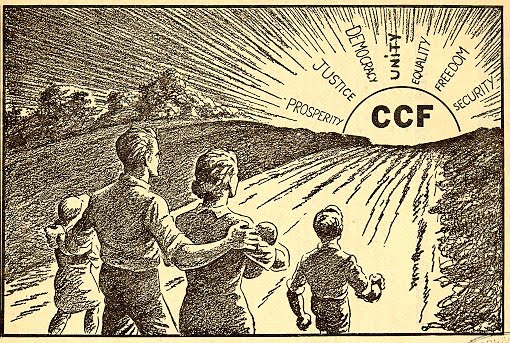
Michel dropped in having heard that there were students from Saskatchewan visiting. He was quite dashing and spoke English well. He praised Saskatchewan's history of democratic socialism and expressed admiration for the CCF and its accomplishments. I dare say he knew more about Saskatchewan politics than we knew of Quebec politics at that time.

I still haven't found a good book in English about him. He remained a principled and steadfast radical and socialist 'till the end. An example to us all. - NYC

Montreal Gazette:  Quebec firebrand Michel Chartrand dies at 93
Socialist Project Bullet Memories of Michel

Introducing the Deeper Roots campaign

An open letter to readers of Briarpatch Magazine.

Dear friend:

I write you at a time of both great crisis and great opportunity for Briarpatch Magazine.

Over the past year, Briarpatch has continued to break new ground in our provocative explorations of food politics, crime and punishment, education, global feminism and more.

And we’ve got lots more up our sleeves, with issues in the works on migration & borders, the politics of health and the soul of activism.

But while the content of the magazine has never been stronger, Briarpatch has not been immune to the consequences of the economic crisis. Facing rising costs and falling revenues, we’ve struggled recently with serious funding stability problems — a crisis/opportunity that has led us to rethink our entire funding model and propose something bold and dynamic in its place: the Deeper Roots campaign.

Finding opportunity in crisis
As you know, the entire media industry is in crisis. Newspapers are closing down, local television is disappearing and investigative journalism is depressingly rare. Beyond these general trends, Briarpatch was denied project funding from the Canada Magazine Fund for the past two years, and at the time of writing, future funding remains uncertain.

According to our financial projections, these two years of lost project funding and other costs could leave us with a $30,000 budget shortfall in 2010/2011 if we don’t act. For a grassroots non-profit organization, the immensity of this projected shortfall is truly scary.

In response, we’ve come up with a plan that could transform our entire funding structure and leave us less dependent on external funding sources.

Community Supported Media

In our efforts to think outside the box of traditional funding models, we draw inspiration from the food security movement, in particular from initiatives like organic farming and community-supported agriculture, which we see as both a metaphor and a business model for the deeper roots and long-term sustainability we seek.

In particular, we look to Cuba’s response to its own sustainability crisis following the collapse of the Soviet Union.

Like Cuba before the Special Period, Briarpatch has become overly reliant on unsustainable infusions of imported energy (not Soviet oil in our case, but, rather, government grants). Cuba addressed its crisis by embracing grassroots, organic, urban agriculture. (Visit powerofcommunity.org to learn more.)

We propose to transplant those lessons from grassroots agriculture to grassroots media.

You’ve heard of Community Supported Agriculture? With your help, we’re building Community Supported Media.

Our plan is ambitious but achievable. And we want it to serve as a model of the grassroots media of the future: organically funded, intellectually nutritious, aesthetically delicious and all-’round good for a growing body politic.

Help us deepen our roots!

More than 150 readers are already making modest monthly donations to Briarpatch; over the next year, we intend to double this number. 150 additional Sustaining Subscribers giving an average of $20/month will ensure Briarpatch has enough stable revenue to remain a beacon in our collective struggle for global sanity long into the future.

For as little as $10/month - the cost of a cup of coffee a week - you can be an integral part of Briarpatch’s continued success, providing us with stable year-round funding.

All Sustainers receive an automatically renewing subscription, a special annual sustainer-only newsletter and printed thanks in every issue. Sustainers of $25 or more will receive all that plus a Briarpatch “resistance is fertile” sticker and a copy of Judy Rebick’s latest book, Transforming Power: From the personal to the political. And sustainers of $50/month or more will receive all of the above, plus 3 gift subscriptions to distribute as you see fit.

But more importantly, you’ll be participating in a media-funding revolution that could distinguish Briarpatch as a model of community-supported, accountable and independent media.

With a little help from readers like you, we can and will emerge stronger from this crisis.

Please consider subscribing or becoming a sustainer. Tomorrow’s rebels, rabble-rousers and radicals will thank you for your support today.

Sincerely,

Dave Oswald Mitchell
Editor

p.s. To set up your sustaining subscription, please call us at 1-866-431-5777 or email publisher AT briarpatchmagazine DOT com.

Tuesday, April 13, 2010

The Socialist Alternative: Real Human Development

A new MR book by Michael A. Lebowitz

“At this historic moment, when the limits and insanity of capitalism are especially clear but an intimidating sense of fatalism militates against a response—neither an alternative to capitalism nor a way to get there seem ‘realistic’—Lebowitz has produced the must-read book for those still clinging to hope. Highly accessible without setting aside the complexities involved, Lebowitz provides a desperately needed framework for linking vision to action to self-and-social transformation. The radicalism that has been so commonly written off as impractical becomes what is in fact the truly ‘practical’ in today’s world.”

Sam Gindin
York University
Former Research Director, Canadian Auto Workers

The Socialist Alternative: Real Human Development
Michael A. Lebowitz
$15.95 paperback
160 pp.
July 2010

Log in to the Monthly Review Store before adding this item to your shopping cart and receive a 20% discount.

Buying Directly from the MR Store Helps Support Monthly Review.

Buy This Book

Monday, April 12, 2010

How to start a new left wing group: the rules

How to start a new left wing group: the rules
New Left Project

1. Don't do something simply because it's what you did in the past.

2. Don't do anything purely because it's NOT what you did in the past.

3. Encourage questions in meetings. Discourage people from making the same standard 3-minute contribution they've made for years.

4. Avoid the words socialist, communist, Marxist, workers and Party when coining your group's name. It is the 21st century.

5. Avoid 'new' when deciding on a name. Today's new is tomorrow's old.

6. Avoid cliche, jargon and empty phrases. 'Networks' is good. 'Resistance' is good. 'Networks of resistance' is less good.

7. Newspapers out, websites in. Simples.

8. Spend more time discussing ideas than what your logo will be. But get the logo right from the start.

9. Don't waste time slagging off whatever group you belonged to in the past. It's like talking about your ex when you're with a new partner.

10. Learn how to use any available technologies, but do something a bit different with them.

11. Keep a sense of perspective. Your group may be tiny, but so are all left wing organisations. Some are just less tiny than others.

12.. Rediscover the ABC of your tradition. It's all been done before.

Thursday, April 8, 2010

Tony Judt and the Limits of Social Democracy

by Chris Maisano
MRzine

In December, the New York Review of Books transcribed an October 2009 speech delivered by the eminent historian Tony Judt at New York University under the title "What Is Living and What Is Dead in Social Democracy?" A major address by Judt on this topic would ordinarily be worth paying attention to regardless of the circumstances. But the speech was infused with an additional urgency by the knowledge that he had recently been diagnosed with Amyotrophic Lateral Sclerosis -- Lou Gehrig's disease -- an incurable condition that will kill him sooner rather than later. In liberal intellectual circles, the response to the speech was immediate and laudatory. In response to popular demand, Judt has expanded his remarks into the short book called Ill Fares the Land, a sharply written polemic that seeks to explain the rise of neoliberalism and calls for a revitalized social democratic politics for the 21st century.

Judt starts out with a shot across the reader's bow. "Something is profoundly wrong with the way we live today," he writes. "For thirty years we have made a virtue out of the pursuit of material self-interest: indeed this very pursuit now constitutes whatever remains of our sense of collective purpose. We know what things cost but have no idea what they are worth." This sense of moral outrage pervades the book and shapes its narrative framework.

That narrative goes roughly like this. From the late 19th century through the 1970s, Western societies became more egalitarian largely because of the efforts of socialists, the labor movement, and others who were appalled by the brutality of untrammeled capitalism to build political institutions that would protect the vast majority from the pervasive insecurities inflicted by decades of depression and war. The crowning achievement of these efforts was the postwar establishment of social democratic regimes across Western Europe and the dominance of New Deal welfare liberalism in the United States. However, as memories of war and depression faded and a new generation raised in the warm embrace of the welfare state chafed at its sometimes paternalistic restrictions, the social democratic consensus was broken and Thatcher, Reagan, and the neoliberal project they represented stepped into the breach. The results: the displacement of the political by the economic, the fraying of social fabrics, and a delegitimation of the democratic state. If this situation is to be reversed, the legitimacy of the state must be restored and government's role in economic redistribution and regulation must be reestablished.

Wednesday, April 7, 2010

Stand against Project Hero and the glorification of war

Please take a moment to sign this petition expressing your opposition to Project Hero and the glorification of Canada's participation in the occupation of Afghanistan.

For background info, please read:
John Conway, "Regina 16 say common folk won freedoms," Calgary Herald
http://www.calgaryherald.com/Regina%20common%20folk%20freedoms/2767446/story.html

We the undersigned urge Canadian universities and colleges not to participate in "Project Hero," a program in which post-secondary institutions waive tuition and course fees for "children of fallen soldiers." Children of deceased members of the Canadian military already have access to benefits through the Children of Deceased Veterans Education Assistance passed in 1953. These benefits cover course fees and tuition as well as a monthly living allowance.

Project Hero is not about aid to the children of deceased soldiers, as their needs are already being met. Rather it is a political effort to justify Canadian participation in the war in Afghanistan and glorify militarism on our campuses. We do not believe our colleges and universities should be participating in this kind of political campaign masked as a student aid program.

We support the effort by University of Regina faculty members to raise the issue of Project Hero on their campus. We are deeply concerned about the response they have met in the form of hate mail, threats and calls for their dismissal. They have every right to raise these issues, and it is essential that free discussion and debate about foreign policy and the role of the military be allowed without vilification and threats of retribution. The University of Regina Administration and the broader community must strongly defend the academic freedom of these faculty members.

The very name of "Project Hero" demonstrates its fundamentally political nature. We believe participation in this project threatens to align our universities and colleges with a particular political message about militarism and the war in Afghanistan. We therefore urge university and college administrators to reject participation in this project.

http://www.thepetitionsite.com/7/stand-against-project-hero-and-the-glorification-of-war

Bone and blood is the price of coal

In solidarity with the families of murdered West Virginia mine workers.


Sunday, April 4, 2010

Humphrey and The Dumptrucks

by beau 23
It Came From Canada

Humphrery and The Dumptrucks have that old-time Canadian sound down pat. By "old-time Canadian sound," I mean that big-as-all-outdoors airiness you hear in early Neil Young tunes, many songs by The Band, and a lot of Maritime musicians. The Rheostatics had it and, to a lesser extent, The Tragically Hip have it, too. Must be something about living in such a huge country, especially if you've traversed it by bus, van or car, as many Canuck musicians have. One member of Humphrey and The Dumptrucks described their sound as "prairie music...It's not country and western; that is, it's not a conventional Nashville sound. It's not rock 'n' roll. It's not folk - though it incorporates all three."

Anyway, Humphrey and The Dumptrucks originally came together as a jug band in Saskatoon in 1967 and played extensively throughout western Canada, appeared on the CBC from time to time and even scored a musical (Cruel Tears, based loosely on Othello) and a ballet ( Goose!, based on Mother Goose rhymes) before calling it a day in 1981. The group's line-up was Gary "Humphrey Dumptruck" Walsh (dobro, banjo), Michael "Bear" Millar (12-string guitar, bass, jug), Michael "Ernie" Taylor (guitar, autoharp), and Graeme Card (guitar, mandolin), with all four members taking turns on vocals.

These four songs are from their 1971 album Six Days Of Painted Ladies, which was released on Boot Records, produced by Jury Krytiuk and Mark Altman, and engineered by Chris Skene and George Semkiw (who also mixed the LP). "Alone In Manitoba," which features some gorgeous slide guitar work, is probably my favourite, but all four are expertly played country/folk/rock with a distinctly Canadian flavour.

Songs and article here.

Saturday, April 3, 2010

Canada at War: Saskatchewan - Embattled Socialists


Oct. 02, 1944

The first Socialist Government of Saskatchewan (and the first in Canada) last week found itself at war with Ottawa on two fronts—politics and money.

The King's Man. When Saskatchewan's 80-year-old Lieutenant Governor Archibald P. McNab asked to retire, Saskatchewan's Socialist Premier Tommy Douglas proposed that the Federal Government consult him on the choice of McNab's successor. Prime Minister William Lyon MacKenzie King's reply was a curt, crusty no.

Douglas retaliated by announcing that as soon as McNab vacated the premises Saskatchewan would convert Regina's $110,000 Government House into a home for the aged or for delinquent girls.* Then he had another idea: Let Ottawa instruct Saskatchewan's Chief Justice to perform the Lieutenant Governor's functions.

Ottawa was fish-cold to this idea too, and for a reason. In addition to purely social duties, the King's representatives in the Provinces have one important function. They can refuse to assent to provincial legislation they believe to be unconstitutional and submit it to the Federal authorities for approval or disallowance. When Alberta's late maverick Premier "Bible Bill" Aberhart went off the legal reservation, the Lieutenant Governor held up some of his wild-eyed measures.

The King's Money. Socialist Premier Douglas had given Ottawa a good reason to remember that precedent. He threatened to welch on a $17,500,000 debt. On the joint guarantees of the Dominion and Saskatchewan Governments, Canadian banks had advanced money so that Saskatchewan's farmers could buy seed after the 1937 drought. It was Saskatchewan's obligation to collect the money. Socialist Douglas proposed to collect only 50% of the principal from the farmers, give the Dominion a provincial I.O.U. for the balance. And to the Federal Treasury, which already holds some $75,000,000 of Saskatchewan notes, he added cheerily: "We are not concerned over giving the Dominion Government more treasury bills. . . . We believe that we shall soon have a Federal Government in power in Ottawa that will wipe out the treasury bills."

What Premier Douglas forgot was that until the Socialists took over, the Federal Government of Mr. King still had the last word. If Saskatchewan ran out on her obligations, the Dominion could recoup by withholding Federal grants.

Thursday, April 1, 2010

Harper’s militarism and Canadian jingoism

By Murray Dobbin
Murray Dobbin's Blog

There was a flurry of news stories last week about an open letter, signed by fifteen University of Regina professors, calling on the university president, Vianne Timmons, to reverse her decision to participate in something called “Project Hero.” The program pays for the tuition and course fees and provides $1000 a year for “dependents of Canadian Forces personnel deceased while serving with an active mission.”

The letter to President Timmons argues that Project Hero “…is a glorification of Canadian imperialism in Afghanistan and elsewhere. We do not want our university associated with the political impulse to unquestioning glorification of military action.”

As you might guess, this glorification of militarism was introduced by our former gun-slinger chief of the armed forces, Rick Hillier. The letter points out that Hillier signed on to it soon after becoming the chancellor of Memorial University in Newfoundland-Labrador. It goes on to state its objections:
“In our view, support for ‘Project Hero’ represents a dangerous cultural turn. It associates ‘heroes’ with the act of military intervention. It erases the space for critical discussion of military policy and practices. In signing on to ‘Project Hero’, the university is implicated in the disturbing construction of the war in Afghanistan by Western military- and state-elites – as the “good war” of our epoch. We insist that our university not be connected with the increasing militarization of Canadian society and politics.”

For their actions in trying to defend the university’s reputation from an association with blatant jingoism, the fifteen Profs have been treated to a wave of attacks from assorted bottom-feeders on Canada’s right. One of the Profs wrote me that he and the others have been subjected to “…a vilification campaign directed in part by right-wing politicians in the Conservative Party and the Saskatchewan Party [the Saskatchewan equivalent of Harper’s Conservatives]. As a result, we have been at the receiving end of a wave of vitriolic hate mails, full of terrible language and demands that we be fired from our university positions.”

This kind of mindless verbal violence is reminiscent of the hate campaigns being fomented by the extreme right of the Republican Party in the US against Obama – campaigns that do not even bother to hide their racism. It is indicative of how easy it is to undermine and gradually change a political culture rooted in a desire for peace and a suspicion of militarism.

The willingness of people to send off hate message without spending a couple of minutes thinking about what the Profs were actually saying shows how important it is to challenge this dumbing-down of our political culture.

As I wrote to Timmons “I feel for the soldiers sent to Afghanistan because the rationale for their ‘mission’ is a lie. They are being deceived and many in addition lose their lives or experience injury or post traumatic stress disorder.But no one involved in an illegal and immoral war can be called a ‘hero.’ It diminishes the idea of heroism and cheapens it.”

Project Hero is purely political and has nothing to do with looking after “our troops.” It is a transparent effort to stop people from thinking about the meaning of our occupation of Afghanistan and our ugly collaboration with US imperial interests.

Project Hero cynically exploits the very soldiers it pretends to be supporting – soldiers who are dying, being wounded and having their lives changed forever in large part because of the lobbying of former general Rick Hillier to take on a combat role that those soldiers were ill-equipped to handle – both in terms of training and equipment. Over 140 Canadian soldiers dead and hundreds more seriously wounded so Hillier could go out and talk about “killing scumbags.”

In fact, the children of soldiers wounded or killed in combat are already afforded generous access to university education. Garson Hunter, who teaches social work at the U of R and is one of the signatories of the letter to president Timmons, served on UN peacekeeping mission in Cyprus as a soldier with the Princess Patricia’s Canadian Light Infantry.

He pointed out to the Regina Leader Post that the program was set up in 1953 under the Children of Deceased Veterans Education Assistance Act. According to the Leader Post, “…the Act uses federal government funding to pay up to $5,000 per academic year to cover tuition and course fees, plus a $372.44-per-month living allowance. Last year, 95 students across the country were covered under the Act, costing taxpayers roughly $500,000.”

Project Hero has no government funding – universities sign on to the program individually and the money comes out of funds normally earmarked for general student assistance. In short, it takes money from students who actually need it and gives it to those who have access to generous funding already.

While the fifteen Profs have had to endure a hate campaign, they may turn out to be the real heroes of the day for alerting people to this program. Those of you in other university communities might consider investigating to ensure that your presidents aren’t getting similarly duped into militarizing our culture.

U of R President Vianne Timmons’ email is: Vianne.Timmons@uregina.ca. Let her know how you feel. You can indicate your support by emailing Jeffery Weber, one of the fifteen, at: jeffery.webber@uregina.ca

Europe: The Crisis of the Left

By Roberto Savio (*)

ROME, Mar (IPS) The victory of the right in January’s elections in Chile has stirred reflections on the crisis of the left. Of the 15 countries in Europe that had leftist governments in 1992, only five do today, and of these three -Portugal, Spain, and Greece-presently find themselves in grave financial and social difficulty. For people under fifty, it is hard to grasp how deep the roots of this crisis go. The solution does not seem to be a quick one.

It should be remembered that since the end of the Second World War and the creation of the UN, we have seen an extraordinary process of political modernisation built on constitutional foundations: social justice and democratic participation. Economic expansion was accompanied by a major process of reform, in particular agrarian, and the expansion of labour rights and health and employment protections.
At the global level, the UN General Assembly adopted in the 1970s a declaration on the New International Economic Order which postulated “global social justice” and recognised the Third World’s right to participate equitably in the world economy. In this period, the values of human development were the basis of political debate. A North-South dialogue was inaugurated involving 22 heads of state, with a first summit held in Paris and a second in Cancun in 1980, attended by the newly-elected Ronald Reagan - a man uninterested in international justice but very interested in trade.

Reagan introduced the famous slogan, “Trade, not aid". And with his allies, like British prime minister Margaret Thatcher, he began to change the course of history. In the 1980s the World Trade Organisation was created outside of the UN system, which was targeted by a campaign to delegitimise it as a forum for international decision-making.
Then came the replacement of the New Information Order and the New Economic Order with the so-called Washington Consensus, which imposed a single neoliberal orthodoxy as the basis of international economic relations. At the same time, Reagan and Thatcher undertook a focused assault on the power of labour unions, beginning a liquidation of state social services that continues to this day.

In 1989, the Berlin Wall fell. The claim was made that what had been defeated was not an enemy -the Soviet Union- but rather the entire opposition to capitalism. Neoliberal author Francis Fukuyama argued that the world had reached “the end of history",because from that point on there would only be capitalism and continuous growth, unrestrained by noxious regulation.
After the death of communism, the death of ideology was proclaimed. The new orthodoxy eliminated all differing opinion. The market was exalted as the best regulator of the economy, society, and culture.

In the face of this colossal lie, the left, in Europe especially, sought to be as unobtrusive and ahistorical as possible, remakingitself according to the styles and the collective imagination of the moment. In general, it split into two groups: “widows” and“virgins".

The widows of the left, except in ex-socialist countries, withdrew from politics. The virgins, in contrast, began to speak of the end of ideology and to espouse pragmatism. “You have to be pragmatic,” was the slogan of the 90s.

Many words were dropped from the political lexicon, which did not help the virgins: social justice, solidarity, transparency, participation, progressive imposition, etc. But pragmatism has a major flaw: without a conceptual framework, it becomes a mechanism that undertakes only that which is possible, and therefore what is useful. Which means it is not pragmatism but utilitarianism.

Politics then focuses its energies only in administrative goals, without a larger social vision and without a defined set of values.
It is a left without an identity, locked into a chronic polemic with the right over personal and administrative questions.
At the same time as this transformation was taking place, a more significant economic change was occurring. After the abolition of banking regulation decreed by Bill Clinton in 1989 and during the neoliberal binge of the G.W. Bush administration, there was an explosive creation of new unprecedentedly high-risk financial instruments. The real economy of goods and services becamesubservient to the financial sector, which grew twenty times faster. The relation between politics and economics underwent a drastic change. Production ceased to be the primary economic referent. And with finance completely globalised and unregulated, the national arena and its laws and institutions began to grow inconsistent.

In the current debate, the old terms have been captured to use in a new Cold War. Republicans are attacking Barack Obama as a socialist. Similarly, Italian premier Silvio Berlusconi denounces the opposition as communists.
And the left?

The left finds itself without the terminology to identify itself with the people. It can no longer speak of social justice, solidarity, equality, or redistribution without being accused of communist nostalgia. In Italy, the situation is so extreme that the Labour Ministry is now referred as the Ministry of Welfare, without a peep of objection from the left, which doesn’t want to appear too leftist.

The list of concessions made by the left in the countries of Europe would fill volumes. In the United States, after the exceptional election of a black man as president in a massive popular vote, we now see that Obama was accompanied into office by the old economic team that was responsible for the current crisis. This blocks any possibility for reform of the bankrupt financial system, which has created hundreds of millions of new poor and will probably suffer another collapse in the not-so-distant future if reform is not forthcoming.

Nobel economist Joseph Stiglitz has said that the winners when the Berlin Wall fell are the losers today as the other wall (Wall Street) falls. How can a young European who has not lived through this stretch of history grasp the paradox Stiglitz points to andbelieve that a left without any identity could be the road to a society different from that of today?

(*) Roberto Savio is founder and president emeritus of the Inter Press Service (IPS) news agency.