Resource Insights
Sunday, May 22, 2011
Certainly, many of us know people who say (wrongly) that nowadays everything causes cancer. This view becomes a justification for making no effort to avoid carcinogens, especially in food. It is a case of learned helplessness that becomes a major public relations weapon for creating and maintaining docile populations. Make people feel powerless. Then, even if they disagree with you, they won't oppose you.
This appears to be the strategy of the genetically modified organism (GMO) crop industry. The mode of attack is the contamination of non-GMO crops through the spread of pollen and the inadvertent mixing of GMO and non-GMO seeds. Large agribusiness giants such as Monsanto claim to recognize "coexistence" with conventional and organic growers as a desirable state. But, the industry acknowledges that contamination is inevitable. In fact, the complete segregation of GMO and non-GMO crops was never on the table. Several high-profile cases of mixing have already demonstrated this. Starlink corn comes to mind as well as the virtual elimination of organic canola growing in Canada because of GMO contamination (with no effective redress in the courts available). And, what we now know about the spread of genes via pollen from GMO to non-GMO plants makes it all but certain no regulatory regime, no matter how comprehensive and severe, could prevent contamination.
Monday, May 23, 2011
Sunday, May 22, 2011
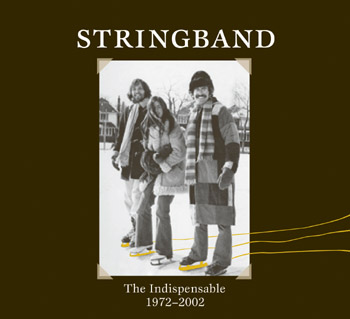
Stringband is on CD!
| Welcome to stringband.net ORDER FORM Discography Links | Music clips |
| At long last, Stringband is on CD. The Indispensable Stringband is a 46-song, box-set retrospective of Stringband’s music, 1972-2002, and it is just $35 and a few key-strokes away. The collection contains all of Stringband’s greatest hits, plus never-before-released cuts, and some new pieces. TIS also includes a 50-page history of Stringband’s Life and Times by Gary Cristall. I haven’t had the chance to update this site yet - soon, I promise -but meanwhile, the album is done and can be mailed to you. It should also be available through discerning record stores. To order, head for the order form. For sound clips, links, or more information about Stringband and its members (including Bob Bossin, Marie-Lynn Hammond, Calvin Cairns, Ben Mink, Terry King, Dennis Nichol), read on. Bob Bossin | ||
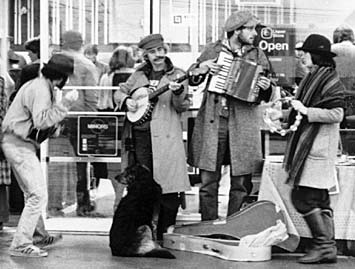
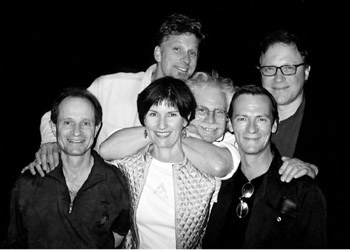
![]() Stringband c.1974 , L to R, Ben Mink, Marie-Lynn Hammond, Bob Bossin ![]() Stringband c.1982 , L to R, Dennis Nichol, Bob Bossin, Calvin Cairns, Marie-Lynn Hammond ![]() Stringband re-union, 2001: L to R, Dennis Nichol, Marie-Lynn Hammond, Calvin Cairns, Bob Bossin, Steve Darke, Ben Mink | ||
Why Colonial Mentality Can't Get Us To Sustainability
By Jim Harding
R-Town News
Feb 25,2011
The nuclear industry is going around the north promoting a nuclear dump as if this was the way to bring development to an impoverished region. $1,000,000 has already been provided by the NWMO to the FSIN, supposedly to help First Nations develop capacity for informed consent about a nuclear dump. But why isn’t a million dollars available to look at sustainable economic options, like more renewable energy in the north? The dice always seemed to be loaded and it is beginning to look like those driving the resource extraction agenda need the north to be impoverished, so that there is less opposition when environmentally-dangerous mega-projects like a nuclear dump get proposed.
Neo-colonial development follows a similar pattern everywhere. Impoverished regions provide a cheap labour pool for lucrative resource extraction. Corporations offer “benefits” to local people that end up benefitting the corporations. Colonial mentality comes, hand-in-hand, with this. Countries even break up over the deep contradictions; we just witnessed the resource rich but impoverished south Sudan vote overwhelmingly for independence, after a vicious civil war with the more politically and economically powerful north.
Portugal: IMF-EU imposes austerity, left fires up for fight
By Dick Nichols, Lisbon
Green Left Weekly
Sunday, May 22, 2011
When the 548 delegates to the Seventh National Convention of Portugal’s Left Bloc came together in a vast sports hall in Lisbon onver May 7-8, they had two big questions to answer.
The first was what alternative should they propose at the June 5 Portuguese elections to the €78 billion (about $103 billion) “rescue package” negotiated between the European Union, European Central Bank and International Monetary Fund (the “troika”) and the Socialist Party (PS) government of prime minister Jose Socrates?
Green Left Weekly
Sunday, May 22, 2011
![]() |
| Left Bloc conference |
The first was what alternative should they propose at the June 5 Portuguese elections to the €78 billion (about $103 billion) “rescue package” negotiated between the European Union, European Central Bank and International Monetary Fund (the “troika”) and the Socialist Party (PS) government of prime minister Jose Socrates?
Douglas bio also medicare history
By HENRY ROPER
The Chronicle Hearld
Sun, May 22
Those who doubt that individuals can change the course of history should look at the career of T.C. (Tommy) Douglas. It was directly as a result of the introduction of universal health care in Saskatchewan that Lester B. Pearson’s federal Liberal government implemented medicare in 1968.
Would the Liberal government have had the courage to bring into being what Canadians now see as a cornerstone of their national identity without the battle fought in Saskatchewan against the medical profession between 1960-62? As the late Canadian journalist Walter Stewart put it in his inimitable way, "People may believe that the Liberals would have produced a universal medical system even without the example set in Saskatchewan, but then, many people believe that Elvis is still alive."
Saturday, May 21, 2011
How the Television Makes Us Stoopid!
Media Mediocrity–Waging War Against Science
How the Television Makes Us Stoopid!
By Richard Zurawski
Fernwood Books
Paperback Price: $24.95 CAD
Publication Date: Mar 2011
We have all, at some point, seen science in action on television. Whether it was a show about disasters or weather, nature or the universe, a science commentator, even a crime show depicting forensic evidence — we have all gleaned tidbits of scientific information while being entertained by our televisions.
Or have we?
From science channels and documentaries to fictional and children’s programming, television brings a myriad of scientific discoveries and theories into the homes of people around the world. But how accurately do these programs represent science? In Media Mediocrity, television producer and broadcaster Richard Zurawski argues that the science we learn on television is inaccurate, misleading and sometimes even dangerous.
Dealing with issues such as tobacco consumption, global warming and Intelligent Design — and a host of pseudoscientific pursuits like UFOs, ghosts and the afterlife, Media Mediocrity examines how television producers’ pursuit of ratings and profit trump any desire to provide the audience with an accurate knowledge of science — and argues that there are real consequences for this lack of knowledge. Four out of five viewers gather the bulk of their scientific knowledge from television, making television an important intermediary between society and its understanding of science. If television gives us misleading — or blatantly false — scientific information, how can we hope to make informed decisions about scientific issues? Equally importantly, who is it that is feeding us this false science? And what do they gain from doing so? If you think your TV has made you an expert, then read this book — and think again.
Contents
Prologue • Introduction–The War Against Science • The Television Cyclops, the One-Eyed Unblinking Monster • Science vs. Journalism: Into the Field of Battle • Television, the Mouthpiece of Vested Interests • The Great Battles in the War Against Science • TV News • Scientists in Television • The Feedback Loop • Bogus Science
Mexico: Imperialism, Bankers, Drug Wars and Genocide
By James Petras
Voltairenet.org
19 May 2011
Much has been written about the Mexican war on drugs and its "house of horrors", of the efforts by the Washington-backed Mexican government to combat the savage struggle among rival drug cartels for control over the lucrative trade. But, as James Petras clearly brings out, no one is seriously interested in making the problem go away. Suffice it to say that in times of deep crises the very survival of the US financial system – and through it, the world banking system – is linked to the liquidity generated by the drug “industry”.
In May 2011, Mexican investigators uncovered another mass clandestine grave with dozens of mutilated corpses; bringing the total number of victims to 40,000 killed since 2006 when the Calderon regime announced its "war on drug traffickers". Backed by advisers, agents and arms, the White House has been the principal promotor of a ’war’ that has totally decimated Mexico’s society and economy.
Voltairenet.org
19 May 2011
Much has been written about the Mexican war on drugs and its "house of horrors", of the efforts by the Washington-backed Mexican government to combat the savage struggle among rival drug cartels for control over the lucrative trade. But, as James Petras clearly brings out, no one is seriously interested in making the problem go away. Suffice it to say that in times of deep crises the very survival of the US financial system – and through it, the world banking system – is linked to the liquidity generated by the drug “industry”.
![]() |
| On the U.S.-Mexico border, drug-related violence rivals immigration as a media fixation, projecting images of Mexico as a failed and violent state. |
"A myriad hands of brotherhood"
"The majority of our workers are foreigners, one or two generations removed, and with their European home-ties and American environment, internationalism becomes the logical patriotism of a heterogeneous population....America--not as a melting-pot, that produces a jingoistic, mercenary, one-mold type, but as a giant loom weaving into a mighty whole the sons, the poetry, the traditions, and the customs of all races, until a beautiful human fabric, with each thread intact, comes forth--would stretch forth a myriad hands of brotherhood to the four quarters of the globe."
- Elizabeth Gurley Flynn, 1890-1964
Who Were Peter and Lou?
CO2 Art
May 21, 2011
Way back when, a pretty much unknown couple were immortalized in song by the Canadian folksinger Valdy, in his song, 'Peter and Lou'.
So who the heck were Peter and Lou, frozen in time "skating on winter's frozen lake"?
They were Peter and Lou Berryman, a young couple from Wisconsin who were folk singers... and anti-war protesters who came to Canada as many young Americans did during the Vietnam War.
Someone who knew them, Craig Wood, was so inspired by their "joie de vivre" as to pen the song that became a successul single for Valdy in Canada in 1976.
Eventually Peter and Lou returned to the U.S. but this spring returned to the protest scene. Now married to other spouses, they still perform together but were back on the protest lines again at the state capitol as the Wisconsin government went on the attack against workers rights.
"Canada should be a refuge from militarism"
-Pierre Trudeau, who opened the door to some 50,000 young American pacifists, draft dodgers and war protesters
Does this Canada still exist?
Apparently, yes. Below is Valdy singing the song a few weeks ago...
May 21, 2011
![]() |
| Lou and Peter Berryman |
So who the heck were Peter and Lou, frozen in time "skating on winter's frozen lake"?
They were Peter and Lou Berryman, a young couple from Wisconsin who were folk singers... and anti-war protesters who came to Canada as many young Americans did during the Vietnam War.
Someone who knew them, Craig Wood, was so inspired by their "joie de vivre" as to pen the song that became a successul single for Valdy in Canada in 1976.
Eventually Peter and Lou returned to the U.S. but this spring returned to the protest scene. Now married to other spouses, they still perform together but were back on the protest lines again at the state capitol as the Wisconsin government went on the attack against workers rights.
"Canada should be a refuge from militarism"
-Pierre Trudeau, who opened the door to some 50,000 young American pacifists, draft dodgers and war protesters
Does this Canada still exist?
Apparently, yes. Below is Valdy singing the song a few weeks ago...
Depression: Non-Insights from Consumer Reports
The Tuesday, May 17, Health and Science section of the Washington Post carried a Consumer Reports Insights article on depression. The article’s commentary regarding depression has little to do with insight, health, or science. In fact, the article is a very good illustration of how disinformation routinely is disseminated to the public. It is an unabashed commercial for psychiatry that overstates how psychiatrists function, ignores their limitations, and fails to report on problems with psychiatric treatment.
Not to be missed here is that this bad information is coming from Consumer Reports, an organization devoted to consumer protection. And, if my attacking Consumer Reports strains your credulity, I will ask you to accept something even harder to believe: Much of Consumer Reports problem is traceable to the NIMH, which is putting out public information not to be trusted.
The Cold War and the Crowsnest Miners
The Cold War and Working-Class Politics in the Coal Mining Communities of the Crowsnest Pass, 1945-1958
Tom Langford and Chris Frazer
Labour/Le Travail
Spring 2002
THIS IS A STUDY of working-class politics durrng the early years of the Cold War in Canada: we compare what transpired on either side of the British Columbia- Alberta border, in the Crowsnest Pass region of the Rocky Mountains.
By the end of World War II, the coal mining communities straddling the Crowsnest Pass had produced a socialist workers' movement that seemed resilient and united, and that had strong ties to the communist movement. Our objective is to explain why the socialist workers ' movement on the British Columbia (BC) ) side of the border proved to be much more resilient in the face of Cold War pressures than its companion movement in Alberta (AB). The study concludes that the difference in cross-border resilience was largely due to the successful pursuit of labour unity politics in die BC Crowsnest and to die collapse of a labour unity strategy in the Alberta Crowsnest.
The Cold War represented the strengthening of reactionary elements within dominant social groups (locally and nationally), and opened the door for aggresssve attacks against militant working-class politics and left-wing movements. The comparative methodology and localized focus of our research demonstrates that such periods of intense struggle do not lead inevitably to the defeat of workers' movements. However, the success of leftist resistance to reactionary offensives depends, then, as now, on working-class unity around struggles, organizations, and public figures that enjoy widespread public sympathy and loyalty.
Read HERE.
Tom Langford and Chris Frazer
Labour/Le Travail
Spring 2002
THIS IS A STUDY of working-class politics durrng the early years of the Cold War in Canada: we compare what transpired on either side of the British Columbia- Alberta border, in the Crowsnest Pass region of the Rocky Mountains.
![]() |
| Read Spirit of the Crowsnest HERE. |
The Cold War represented the strengthening of reactionary elements within dominant social groups (locally and nationally), and opened the door for aggresssve attacks against militant working-class politics and left-wing movements. The comparative methodology and localized focus of our research demonstrates that such periods of intense struggle do not lead inevitably to the defeat of workers' movements. However, the success of leftist resistance to reactionary offensives depends, then, as now, on working-class unity around struggles, organizations, and public figures that enjoy widespread public sympathy and loyalty.
Read HERE.
Subscribe to:
Posts (Atom)